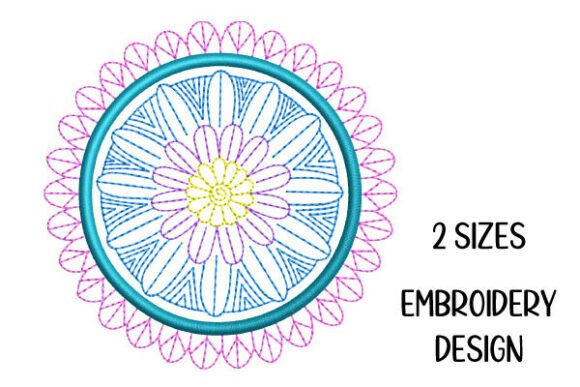
Tiny Mandala Flower: A Craft Fair Review
As an embroidery designer who has spent countless weekends behind a booth table, I have learned that not every machine embroidery design is created equal when it comes to retail success. Some designs are beautiful on screen but vanish in person; others are so dense they ruin the fabric hand. Today, I am reviewing the Tiny Mandala Flower Embroidery Line Art from the perspective of a seller preparing for a high-traffic craft fair. My goal is to determine if this specific embroidery file can carry a product line, attract buyers, and withstand the rigors of batch production.
First Impressions: Minimalist Elegance
The first thing that strikes me about the Tiny Mandala Flower Embroidery Line Art is its refined simplicity. In a market often saturated with overly complex, colorful, or novelty motifs, this design offers a breath of fresh air. It feels modern, soft, and undeniably elegant. The description promises "the elegance of simplicity," and visually, it delivers. This is not a loud, festive pattern screaming for attention; rather, it is a graceful charm that invites closer inspection.
For a craft fair product, this aesthetic is powerful. It appeals to the buyer looking for understated luxury—the person who wants a handmade product that fits seamlessly into a minimalist home or a capsule wardrobe. The line art style suggests sophistication without pretension, making it versatile enough for various demographics, from young professionals to mature homeowners seeking quality decor.
Versatility Across Product Lines
The true test of any digital embroidery file is its adaptability. I evaluated how this mandala design performs across several common small shop product categories. Here is where it shines:
- Tote Bag Design: Placed centrally on a canvas tote, the design acts as a subtle logo. It transforms a basic bag into a branded accessory without overwhelming the material.
- Apron Embroidery: On a linen or cotton apron, the flower adds a touch of artisanal warmth. It works beautifully on the bib or the lower corner, suggesting a connection to slow living and handmade care.
- Tea Towel Embroidery: This is perhaps the strongest application. The open nature of line art prevents the towel from becoming stiff. It elevates a simple kitchen textile into a giftable item.
- Embroidered Patch: If digitized correctly for cut-and-sew applications, this design makes for a delicate, high-end patch that can be ironed onto denim jackets or backpacks.
- Pillow Covers and Pouches: As a focal point on a neutral pillow or a small fabric pouch, the mandala provides visual interest without clashing with other room decor.
For Etsy sellers and boutique makers, this versatility means you can create a cohesive collection. You are not limited to one item type; you can build a brand identity around this single, strong visual element.
Production Practicality and Sales Potential
From a production standpoint, time is money. A design that takes forty minutes to stitch is less viable for a busy craft fair prep week than one that stitches out in ten. While the exact stitch count is not provided in the brief, the "line art" description suggests a lower stitch density compared to filled satin designs. This is a significant advantage. Lower density means faster production, less thread consumption, and reduced risk of fabric puckering.
Photographically, this design is a dream for online listings. High-contrast line art pops in photos, especially against light fabrics. It creates clean, crisp images that perform well on social media and in printable mockup previews. For customers scrolling through an online store, the clarity of the design communicates quality instantly.
However, there are careful-use notes to consider. Because this is a line art design, precision is key. If the lines are too thin, they may disappear on textured fabrics like thick terry cloth towels. Conversely, on very dark fabrics, you must ensure your thread colors provide sufficient contrast. A white thread on black linen looks stunning, but a pastel on navy might get lost. Always test your design assets on the actual materials you intend to sell.
Technical Considerations for the Designer
Before you commit to producing fifty units for your next market, you must treat this commercial embroidery asset with technical rigor. Here is my checklist for ensuring the Tiny Mandala Flower Embroidery Line Art translates perfectly from screen to stitch:
- Test on Scrap Fabric: Never skip this step. Stitch the design on the exact weight and weave of your final product fabric.
- Check Thread Contrast: Ensure the thread color stands out against the background. Monochromatic looks can be chic, but they require perfect lighting to be appreciated.
- Review Spacing and Density: Look for jumps or loose threads. Line art requires consistent tension to maintain its delicate appearance.
- Confirm Hoop Size: The description mentions two distinct sizes, but you must verify which hoop size corresponds to which file. Ensure the design fits comfortably within your machine’s capabilities without hitting the hoop edges.
- Use the Right Stabilizer: Even for low-density designs, proper stabilization prevents distortion. Use a cut-away for stretchy fabrics and tear-away for stable wovens.
- Create Real Mockups: Do not rely solely on digital previews. Photograph the stitched sample in natural light to see how it truly looks.
- Verify Licensing: Before selling any finished product, confirm that your purchase of the digital embroidery file includes commercial rights. Most reputable designers do, but always read the terms.
Enhancing Brand and Buyer Engagement
Ultimately, the Tiny Mandala Flower Embroidery Line Art is more than just a pattern; it is a tool for brand building. Its consistent, elegant appearance helps establish a recognizable visual identity. When customers see this specific mandala on a tote, then on a towel, and then on a pouch, they begin to associate that level of quality and style with your shop.
In a crowded craft fair aisle, this design helps your booth stand out through cohesion. Instead of a chaotic mix of unrelated motifs, you present a curated collection. This perceived professionalism increases the perceived value of each item. Buyers are often willing to pay more for products that look like part of a thoughtful, designed series rather than random experiments.
For the creative entrepreneur, this design offers a balance of ease and impact. It is simple enough to produce in volume yet distinctive enough to capture attention. Whether you are an Etsy seller looking to expand your catalog or a local maker preparing for holiday markets, integrating this mandala into your lineup could be the strategic move that elevates your brand from hobbyist to professional.
In conclusion, the Tiny Mandala Flower Embroidery Line Art is a strong contender for any handmade shop owner prioritizing elegance and efficiency. By respecting the technical requirements of line art stitching and leveraging its versatility across multiple product types, you can create a compelling, profitable collection that resonates with modern buyers. Remember to check the specific file details for stitch count and format, test thoroughly, and let the simplicity of the design speak for itself.